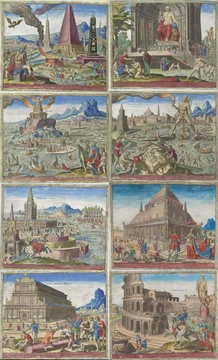
The Great Wall of China
A series of fortifications built across northern Chinese borders.

Jakub Hałun · CC BY-SA 4.0
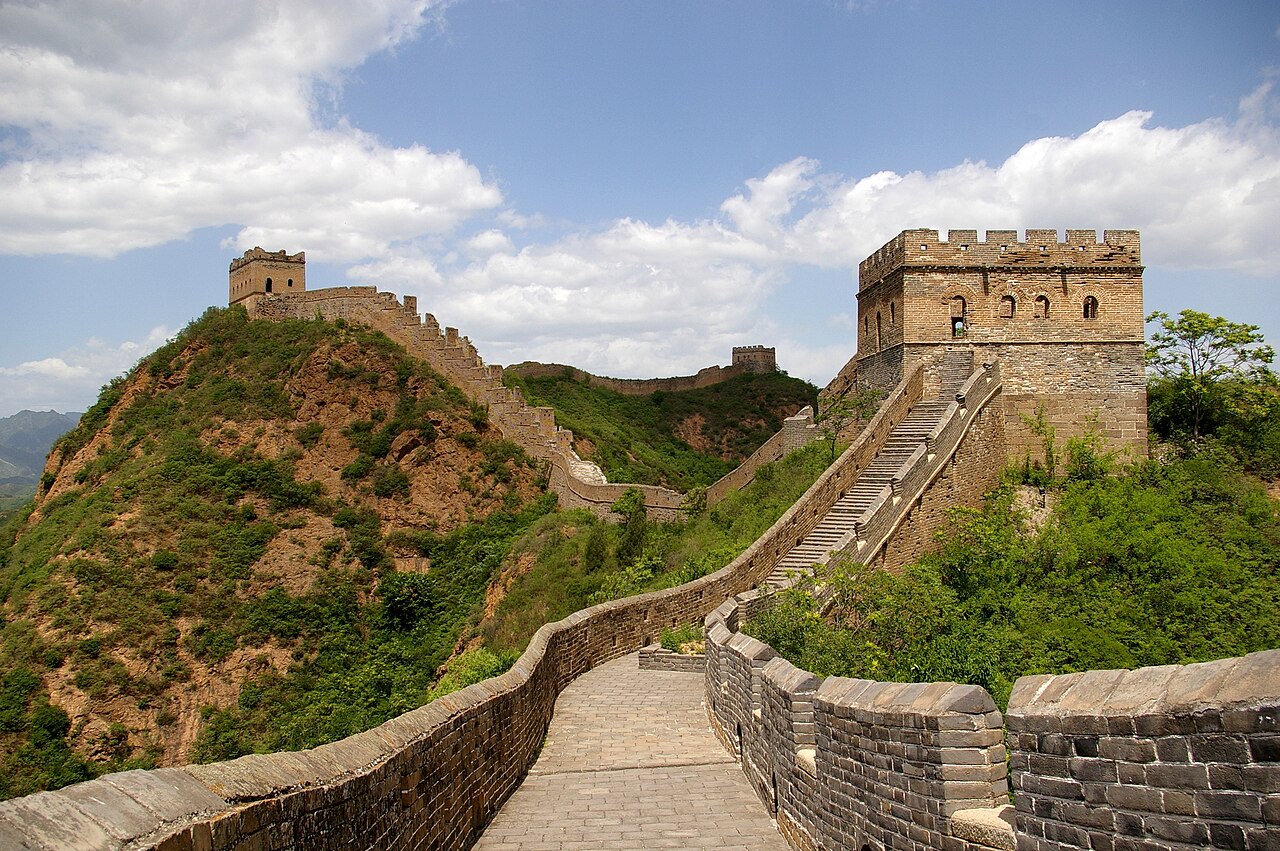
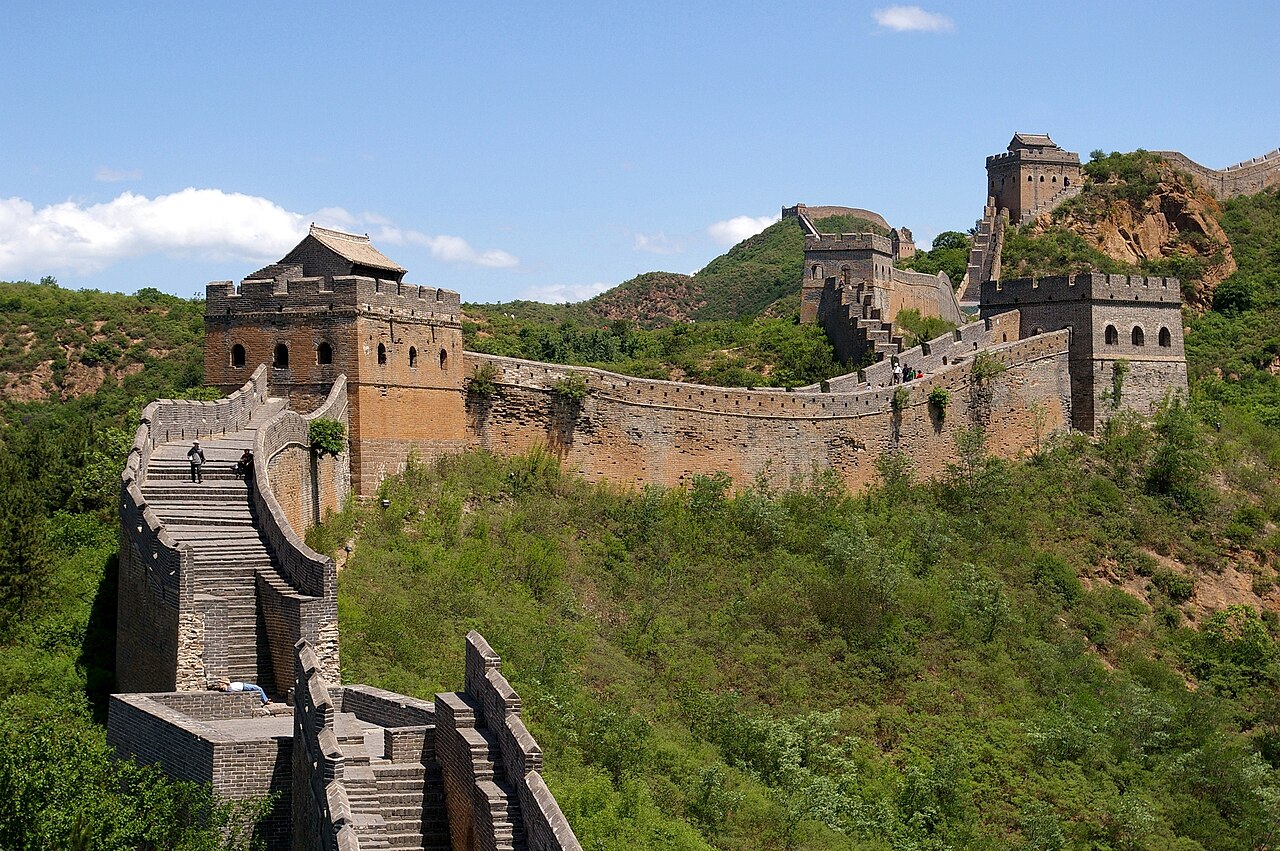
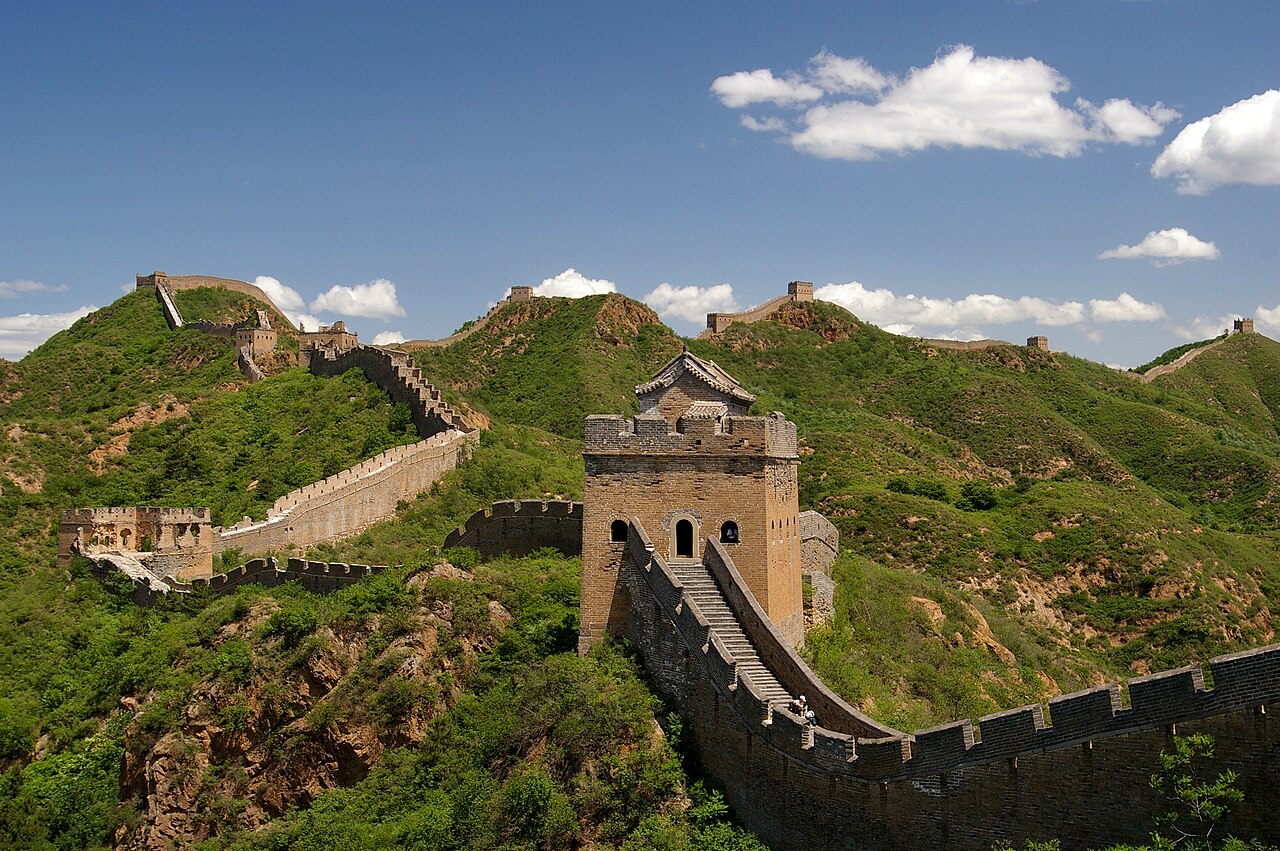
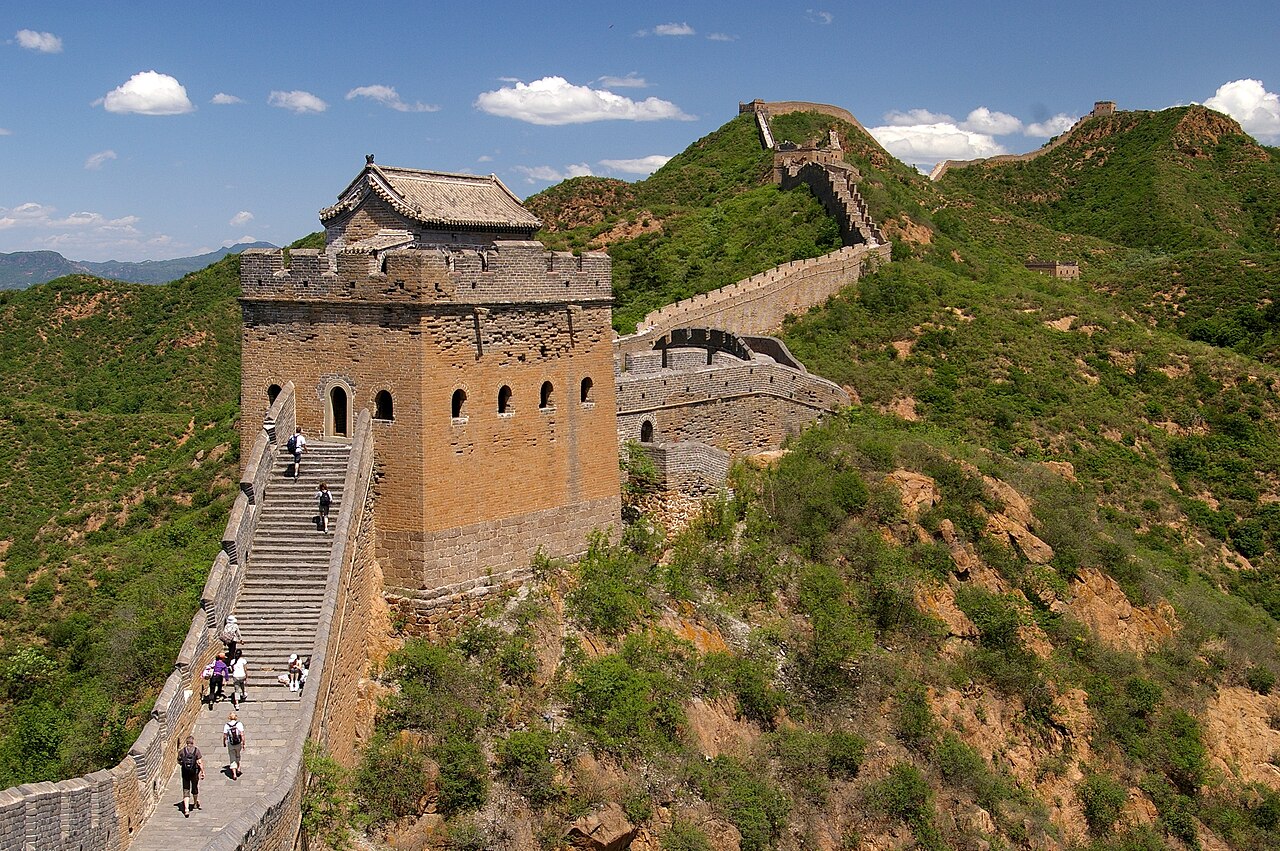
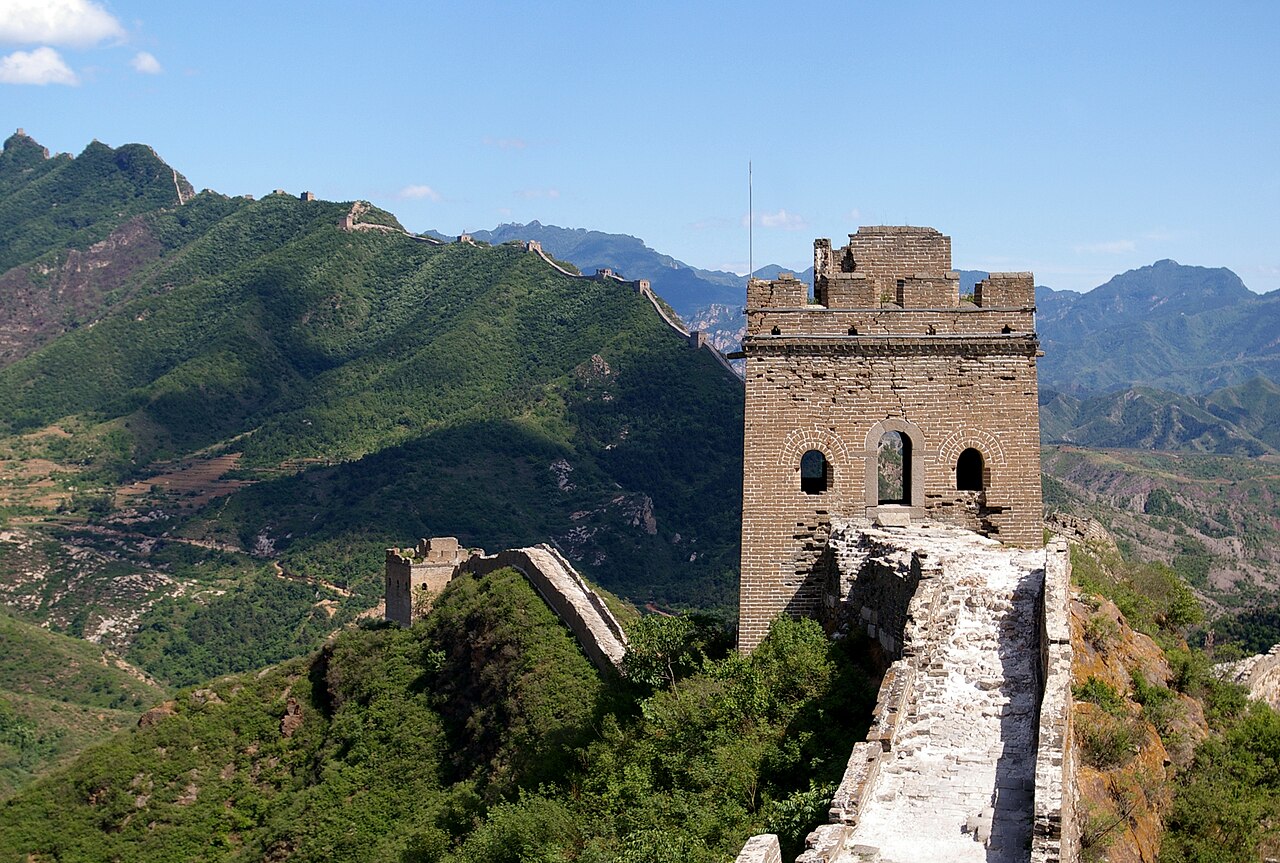
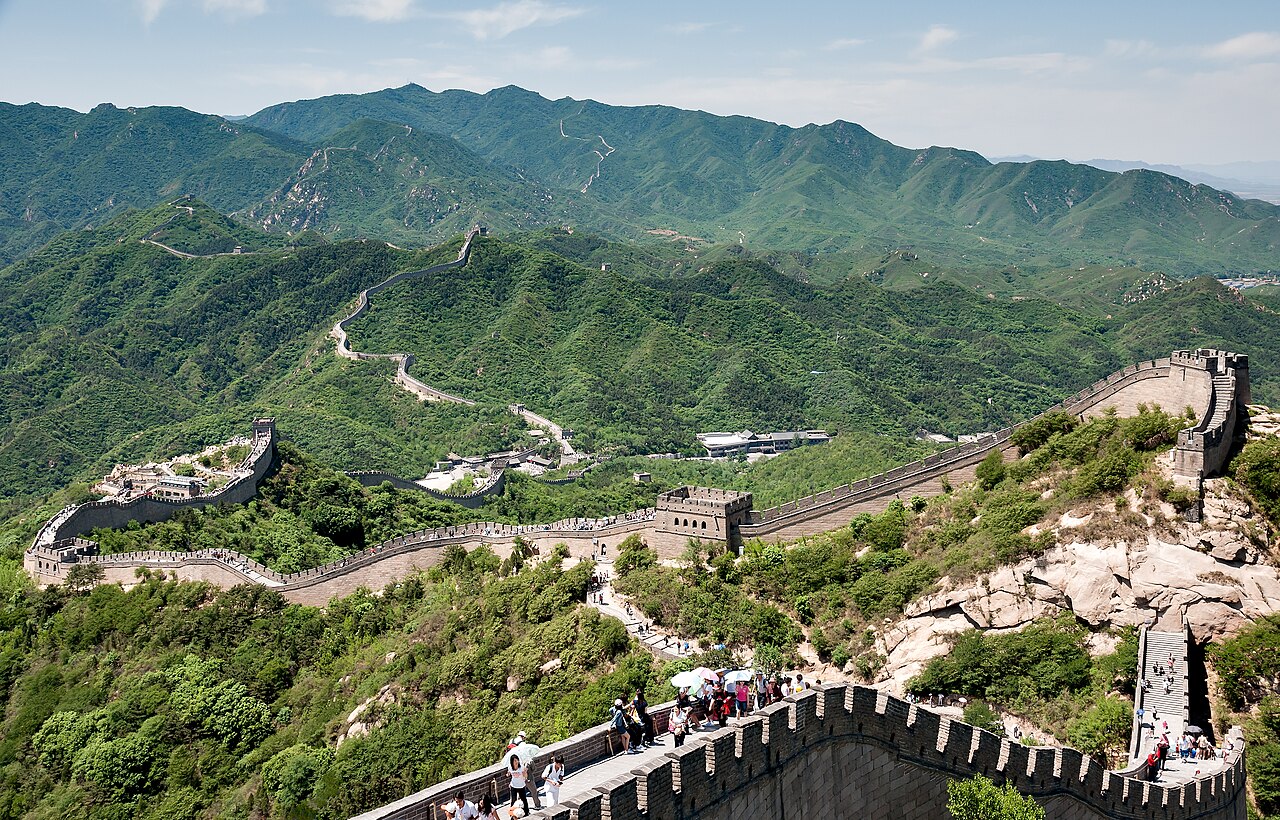
The Great Wall of China is a series of fortifications built across the historical northern borders of ancient Chinese states and Imperial China. Its purpose was protection against various nomadic groups from the Eurasian Steppe, and it also served border controls, regulation of trade, and as a transportation corridor.
- field
- Defensive architecture
- nationality
- China
- known_for
- One of the most impressive architectural feats in history
- UNESCO_designation
- World Heritage Site
- New_7_Wonders_vote
- 2007
Lore & Background
The earliest walls date to the 7th century BC, built by various states during the Spring and Autumn and Warring States periods. Builders used local materials: stone in mountains, rammed earth on plains. No surviving records indicate the exact length of the Qin walls, and most sections have eroded.
Reader's Guide
It also functioned for border controls, regulating immigration, emigration, and duties on goods along the Silk Road. It is a UNESCO World Heritage Site and was voted one of the New 7 Wonders of the World in 2007. The wall's legacy endures as a symbol of ancient Chinese engineering and statecraft, though its name evolved over centuries, with 'Long Wall' appearing in Sima Qian's Records of the Grand Historian and 'Ten-Thousand Mile Long Wall' later becoming common.
Did You Know?
- The Ming Great Wall's western terminus is at Jiayuguan, not Lop Lake.
- The Chinese name 'Ten-Thousand Mile Long Wall' uses 'ten-thousand' figuratively to mean 'innumerable' or 'immeasurable'.
Engineering & Construction Methods
The Great Wall was never a single monolithic structure but a sprawling network of fortifications whose construction spanned centuries and varied dramatically by terrain. During the Spring and Autumn period (8th–5th centuries BC), the warring states of Zheng, Chu, Qin, Wei, Zhao, Qi, Lu, Han, Yan, Zhongshan, and Zhou each raised their own defensive lines, typically using stone in mountainous regions and rammed earth—packed between wooden board frames—in the flatter plains. These early walls were designed to repel small-arms attacks with swords and spears. A guiding principle called "build and move on" meant the wall was never intended as a permanently fixed border. Because hauling massive quantities of material over long distances was impractical, builders relied on locally sourced stone or earth, and no surviving records document the exact length or course of the original Qin fortifications, most of which have since eroded away.
A Multi-Dynastic Legacy
What we now call the Great Wall is in fact the accumulated work of many regimes over more than two millennia. The earliest known fortifications date to the seventh century BC, when individual warring states built separate barriers to guard their own borders. The Han, the Northern dynasties, and the Sui all invested heavily in repairing, rebuilding, or extending sections to counter northern invaders, while the Tang and Song dynasties made comparatively little effort in the region. Notably, dynasties founded by non-Han peoples—the Xianbei-ruled Northern Wei, the Khitan-ruled Liao, the Jurchen-led Jin, and the Tangut-established Western Xia—also constructed their own border walls, often reaching further north into what is now Mongolia.
Military Infrastructure and Economic Governance
Far from being a simple wall, the Great Wall operated as a layered military and administrative infrastructure. Its defensive toolkit included watchtowers, troop barracks, garrison stations, and a long-range signaling network that used smoke during the day and fire at night to relay messages across vast distances. The structure also served as a transportation corridor, facilitating the movement of troops and supplies along the frontier. Beyond pure military defense, the wall functioned as a border-control mechanism: it regulated immigration and emigration, and it allowed authorities to impose duties on goods moving along the Silk Road, making it a critical instrument of trade regulation. In this way, the fortifications were as much about economic governance and the management of cross-border movement as they were about repelling cavalry raids from the Eurasian Steppe. Today, the entire system is recognized as one of the most impressive architectural achievements in human history, holds UNESCO World Heritage status, and was voted one of the New 7 Wonders of the World in 2007.
Names, Myths, and Cultural Identity
The wall has carried a remarkable variety of names across languages and centuries. In Chinese historiography, Sima Qian's Records of the Grand Historian uses the term "Long Wall" (Chángchéng), a phono-semantic compound whose character 城 originally denoted the rampart surrounding a city. Because the First Emperor's association with tyranny made the name politically sensitive, later dynasties preferred terms like "frontier," "rampart," "barrier," or the poetic "Purple Frontier" and "Earth Dragon." Only during the Qing period did "Long Wall" become the universal catch-all. In English, the name evolved from early travelers' "the Chinese wall" to the standard "Great Wall of China" by the nineteenth century, while German still uses the older form. Sections in the Gobi and Mongolian steppe are sometimes called the "Wall of Genghis Khan," despite the fact that he never built any walls himself.
Common Misconceptions (Editorial)
Some people believe the Great Wall of China is a single continuous wall built in one period, but it is actually a series of fortifications built across centuries, with the earliest walls dating to the 7th century BC. Another common misconception is that the wall’s western terminus is at Lop Lake; in fact, the Ming Great Wall’s western end is at Jiayuguan. Additionally, the Chinese name “Ten-Thousand Mile Long Wall” is often taken literally, but the term “ten-thousand” is used figuratively to mean “innumerable” or “immeasurable.”
Why It Matters (Editorial)
The Great Wall endures because it represents both human ingenuity and the enduring struggle between settled civilizations and nomadic powers. As a UNESCO World Heritage Site and a 2007 New7Wonders vote winner, it remains a powerful symbol of China’s historical ambition and defensive resolve, reminding us that physical boundaries can define not only territories but also identities across millennia.
Gallery
Frequently Asked Questions
What is The Great Wall of China?
It is a vast network of fortification walls stretching across the northern borders of what is now China. Built and expanded over many centuries by successive Chinese dynasties, it stands as one of the most remarkable examples of defensive architecture in human history.
Why was The Great Wall of China originally constructed?
Its primary purpose was to shield Chinese states and empires from incursions by nomadic groups from the Eurasian Steppe. It also functioned as a mechanism for border control, trade regulation, and as a transportation corridor along the northern frontier.
When did The Great Wall of China receive its major international designations?
The wall was inscribed as a UNESCO World Heritage Site, recognizing its outstanding universal value as an architectural and historical monument. It also earned a place among the New 7 Wonders of the World through a global public vote held in 2007.
More in World Wonders 1-22
Spotted an error? Know more?
This is a living reference — every entry is fact-audited, and reader corrections feed straight into our audit queue. Suggest an edit · See this site's audit record