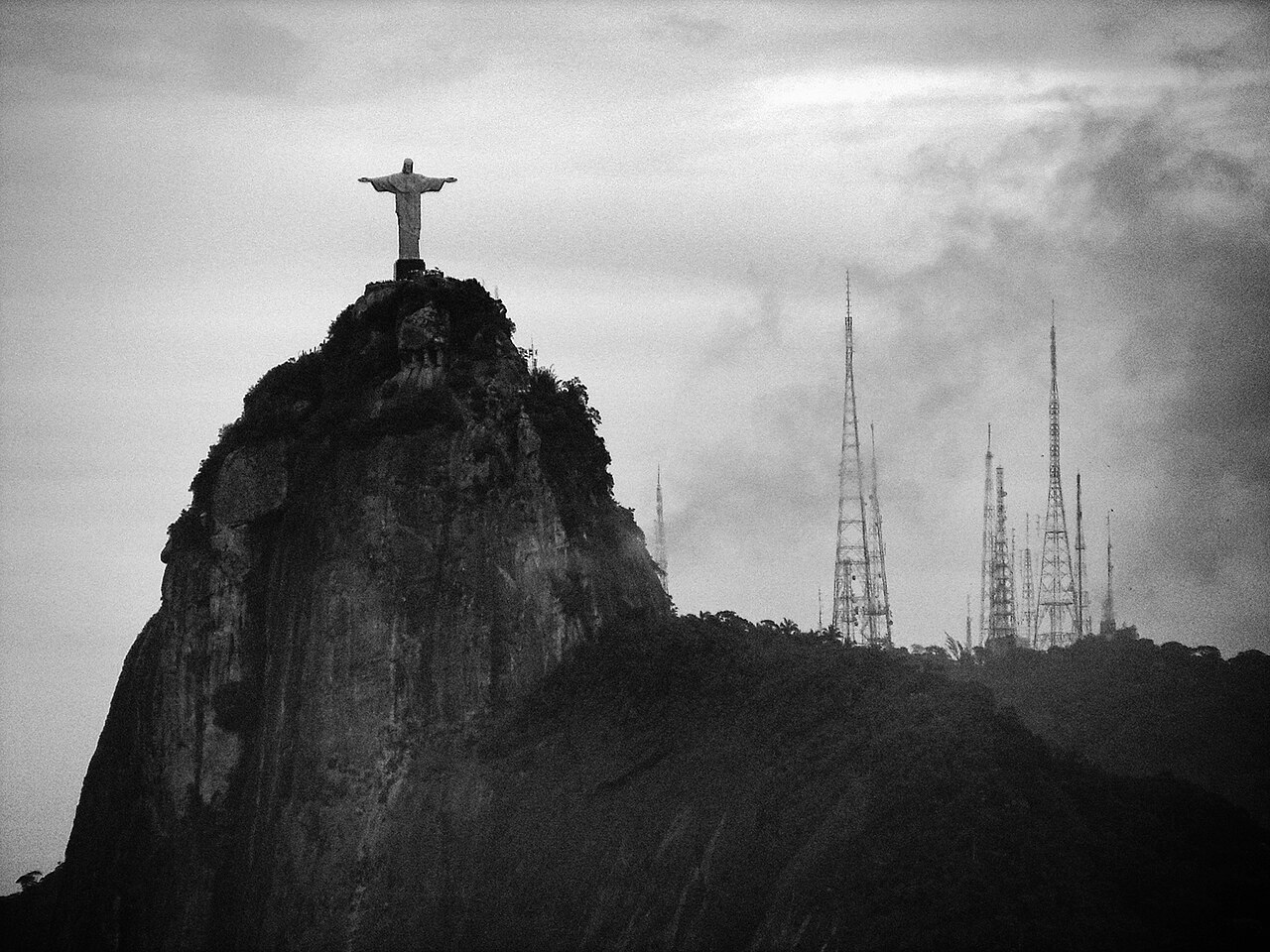
Christ the Redeemer
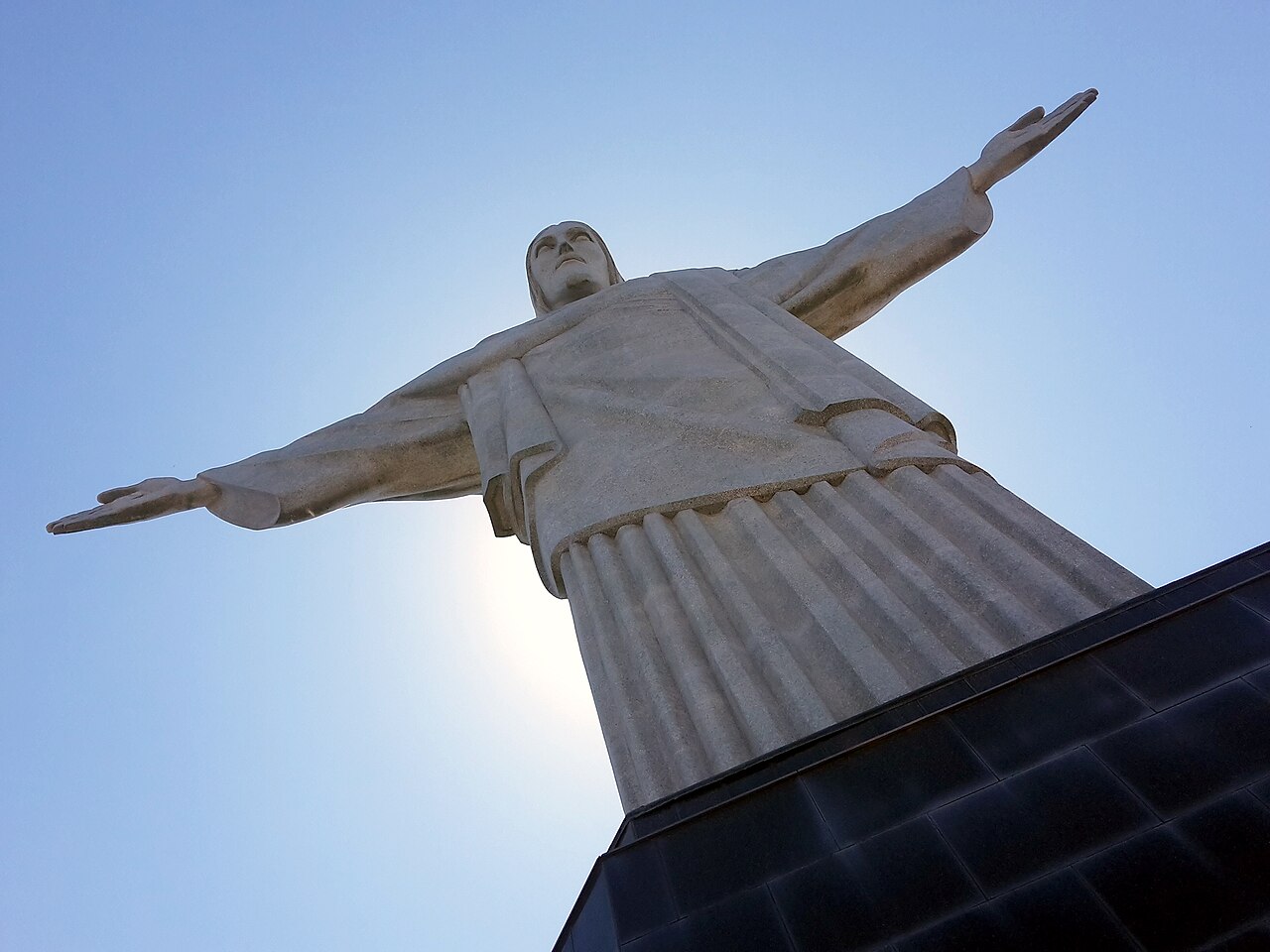
Art Deco statue of Jesus in Rio de Janeiro, Brazil.

Diego Torres Silvestre from Sao Paulo, Brazil · CC BY 2.0
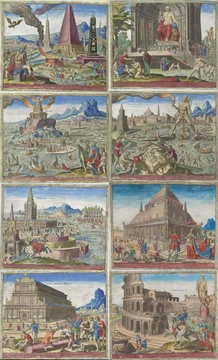
Christ the Redeemer (Portuguese: Cristo Redentor) is an Art Deco statue of Jesus in Rio de Janeiro, Brazil. It stands as a symbol of Christianity worldwide and a cultural icon of both Rio de Janeiro and Brazil, and was voted one of the New 7 Wonders of the World.
- height
- 30 meters (98 ft), excluding 8-meter (26 ft) pedestal
- arm_span
- 28 meters (92 ft)
- material
- Reinforced concrete and soapstone
- location
- Peak of Corcovado mountain in Tijuca National Park, Rio de Janeiro, Brazil
- style
- Art Deco
Lore & Background
The idea for a Christian monument on Mount Corcovado was first suggested by Vincentian priest Pedro Maria Boss in the mid-1850s to honor Princess Isabel, but the project was not approved. Donations came mostly from Brazilian Catholics. Designs considered included a cross, a statue of Jesus with a globe, and a pedestal symbolizing the world; the open-armed statue of Christ the Redeemer, a symbol of peace, was chosen. Local engineer Heitor da Silva Costa and artist Carlos Oswald designed the statue. A group of engineers and technicians decided reinforced concrete (designed by Albert Caquot) was more suitable than steel. The concrete base was supplied from Limhamn, Sweden, and the outer layers are soapstone.
Reader's Guide
Christ the Redeemer is the largest Art Deco–style sculpture in the world and a globally recognized symbol of Christianity. Its construction involved international collaboration across Brazil, France, and Romania, and it stands as a testament to early 20th-century engineering and artistic ambition. It remains a major tourist attraction and a symbol of Rio de Janeiro and Brazil, requiring periodic maintenance due to wind, erosion, and lightning.
Did You Know?
- The statue differs considerably from its original design, which was a large Christ with a globe in one hand and a cross in the other.
- The face was sculpted by Romanian sculptor Gheorghe Leonida.
- A chapel named after Brazil's patron saint—Our Lady of the Apparition—was consecrated under the statue in October 2006.
The Brazilian Mobilization
The campaign to secure a place for Christ the Redeemer among the New 7 Wonders became one of the most visible public mobilization efforts in modern Brazilian history. Under the banner 'Vote no Cristo,' private corporations threw their weight behind the statue. Telecommunications operators waived charges so citizens could place voting calls and send SMS messages at no cost, while major sponsors including Banco Bradesco and Rede Globo poured millions of reais into promotional spending. The saturation was extraordinary: residents of Rio de Janeiro received beeping text prompts urging them to press a specific code, the same message flashed every time commuters swiped transit cards on city buses, and television infomercials featured reality-show personalities standing beside the city's iconic statue. By early July 2007, an estimated ten million Brazilians had cast their ballots—a figure that remains approximate because the organizing foundation never published official turnout numbers for the campaign.
The Architecture of the Poll
Launched in 2001 under the direction of Canadian-Swiss organizer Bernard Weber, the New 7 Wonders initiative was structured as a global popularity contest open to anyone with internet access or a telephone. The New 7 Wonders Foundation, headquartered in Zurich, Switzerland, invited the public to participate through free web-based ballots and telephone voting lines. The candidate pool began with two hundred existing monuments worldwide, was trimmed to seventy-seven, and then further narrowed by a selection panel in 2006 to twenty-one finalists before the final seven were determined. The results were unveiled on 7 July 2007 at Estádio da Luz in Lisbon, Portugal, in a widely watched public announcement. Despite the enormous scale, the methodology drew sustained criticism; because individual participants were permitted to cast multiple votes, the exercise was widely regarded as unscientific. Nevertheless, John Zogby, founder and chief executive of the American polling firm Zogby International, characterized the effort as the largest poll ever conducted in history.
Institutional Reactions and UNESCO's Distance
Governments around the world reacted to the New 7 Wonders campaign with a spectrum of enthusiasm and skepticism. Some nations launched aggressive lobbying efforts to boost their national monument's tally, while others dismissed the contest outright. The most pointed institutional criticism came from UNESCO, the United Nations body responsible for designating World Heritage Sites. Although UNESCO had initially offered guidance on nominee selection when the campaign launched in 2001, it formally distanced itself from the project both at that time and again in 2007. In a June 20, 2007 press release, UNESCO emphasized that it had no connection to the initiative and argued that the resulting list was merely a private undertaking reflecting the opinions of internet users rather than the broader global population. The organization stressed that its own World Heritage designation process, grounded in scientific and educational criteria, could not be equated with a media-driven popularity vote, and questioned whether such a campaign could meaningfully contribute to the long-term preservation of the sites it selected.
Financial Model and Subsequent Programs
Behind the spectacle of the New 7 Wonders campaign lay a modest financial reality. The foundation, established in 2001, operated without any public funding, relying instead on private donations and the sale of broadcast rights. Although the organization describes itself as not-for-profit, the commercial entity behind it, the New Open World Corporation (NOWC), is a for-profit business to which all licensing and sponsorship revenue flows. After the final winners were announced in 2007, the foundation publicly acknowledged that it had earned nothing from the entire exercise and had barely recouped its initial investment. The campaign's legacy extended beyond the original monument vote. These follow-up initiatives carried forward the same format of public polling to identify and celebrate natural landmarks and urban centers, though none matched the original campaign's global media saturation.
Common Misconceptions (Editorial)
- Some people assume the statue was always designed as it appears today, but the original proposed design featured Christ holding a globe in one hand and a cross in the other. - Another common misconception is that the statue is made entirely of steel; in fact, it is constructed of reinforced concrete with an outer layer of soapstone.
Why It Matters (Editorial)
Christ the Redeemer endures not only as an architectural marvel but as a universal symbol of peace and welcome, its open arms mirroring the embrace the statue represents. Its status as one of the New 7 Wonders of the World reflects a collective human desire for landmarks that transcend religious boundaries to inspire awe and unity across cultures.
Gallery

Frequently Asked Questions
What is Christ the Redeemer's role in the world?
The statue functions as a global emblem of Christianity and a beloved cultural landmark for both Rio de Janeiro and Brazil as a whole. It was also selected as one of the New 7 Wonders of the World through a public vote.
Why is Christ the Redeemer important?
At 30 meters tall (not counting its 8-meter pedestal) with a 28-meter arm span, it is one of the most recognizable religious monuments on Earth. It stands as a lasting symbol of faith, peace, and Brazilian identity that draws millions of visitors every year.
More in World Wonders 1-22
Spotted an error? Know more?
This is a living reference — every entry is fact-audited, and reader corrections feed straight into our audit queue. Suggest an edit · See this site's audit record