Stonehenge
Prehistoric megalithic monument on Salisbury Plain, England.

Diego Delso · CC BY-SA 4.0
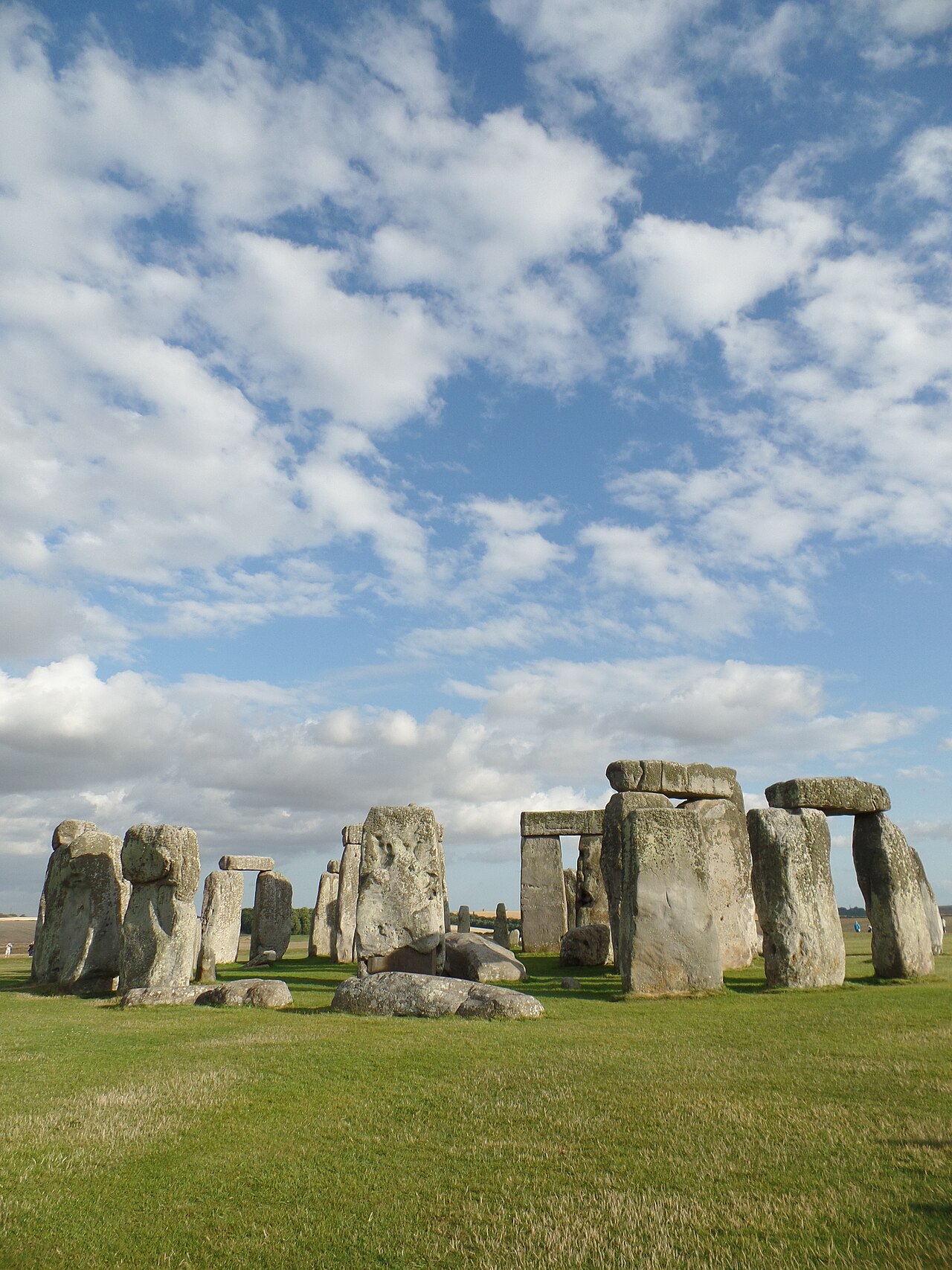
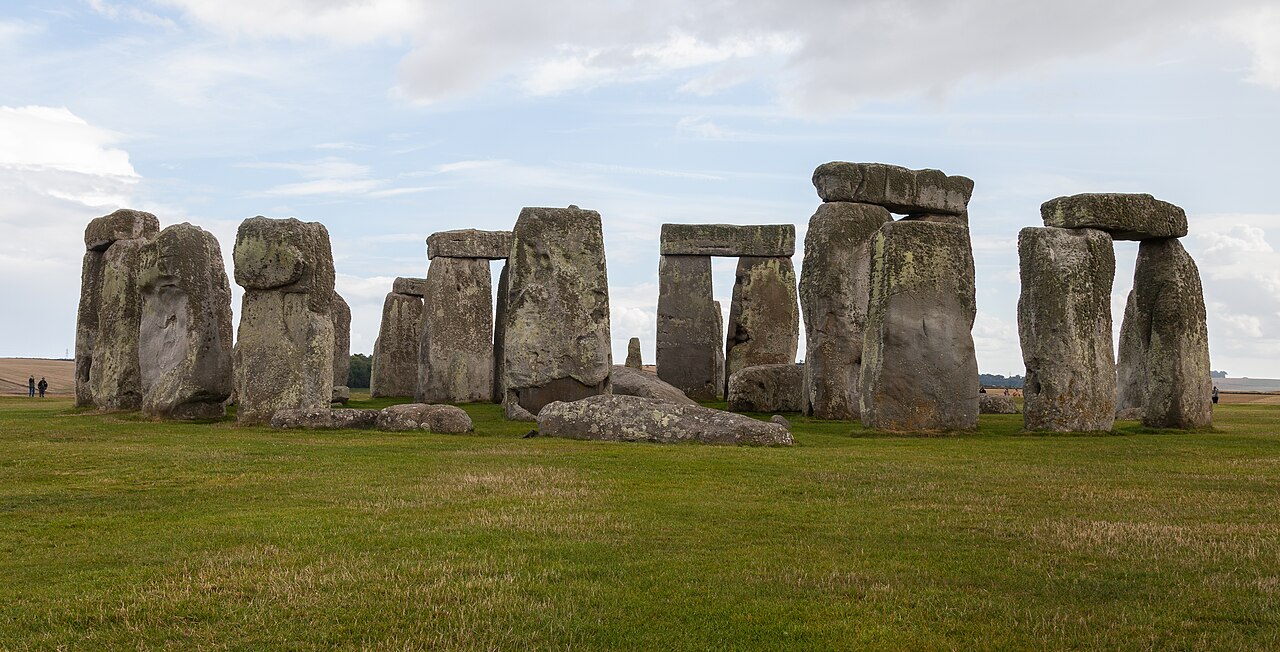
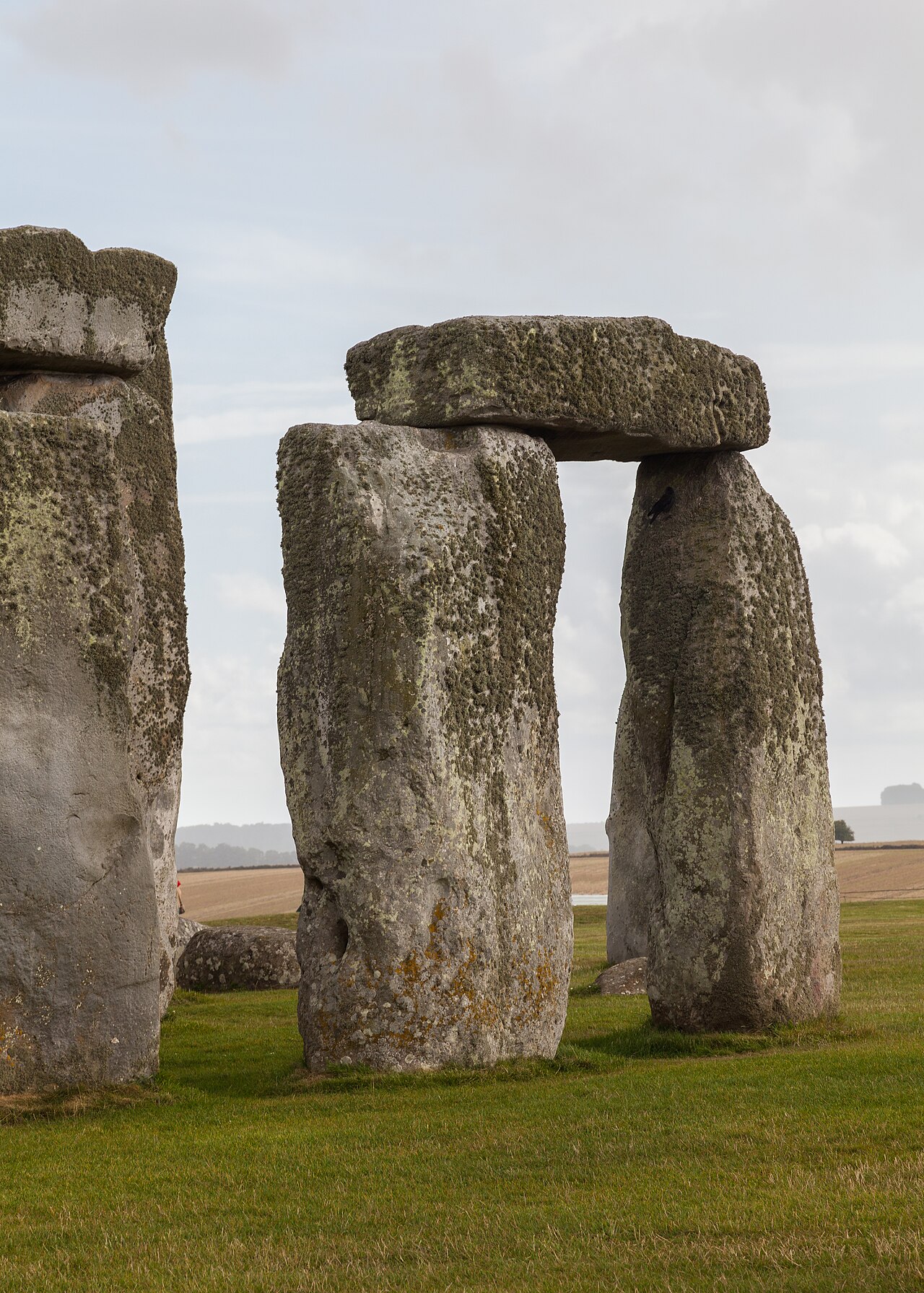
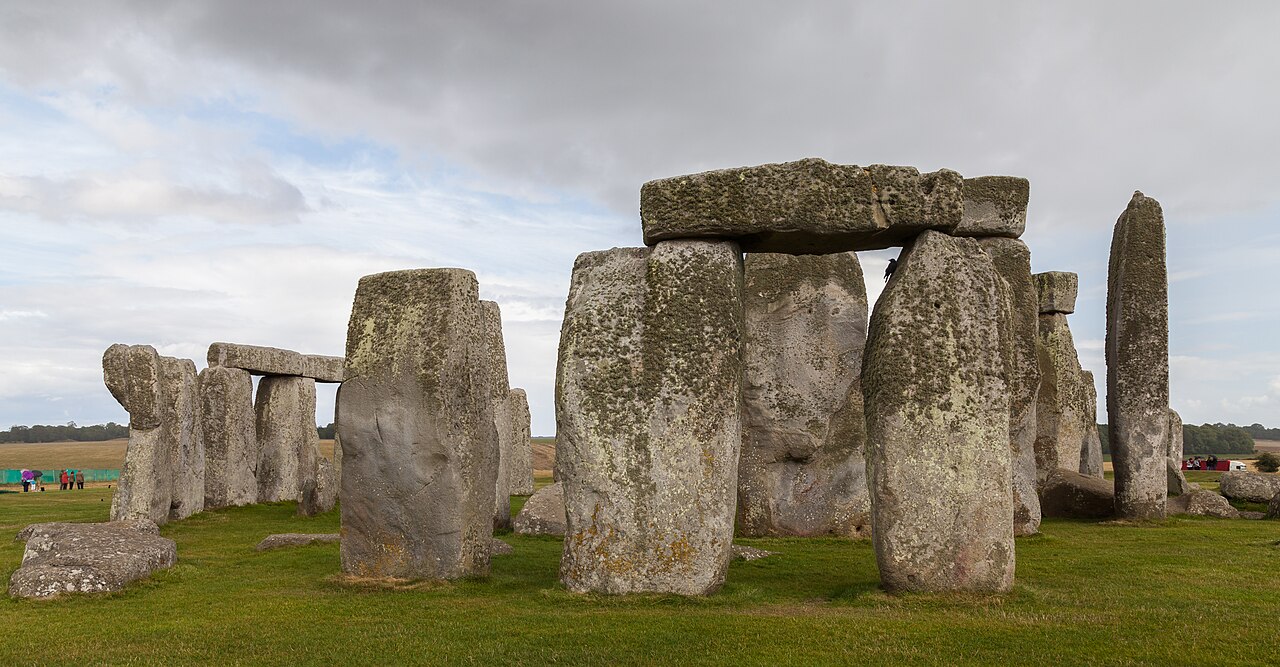
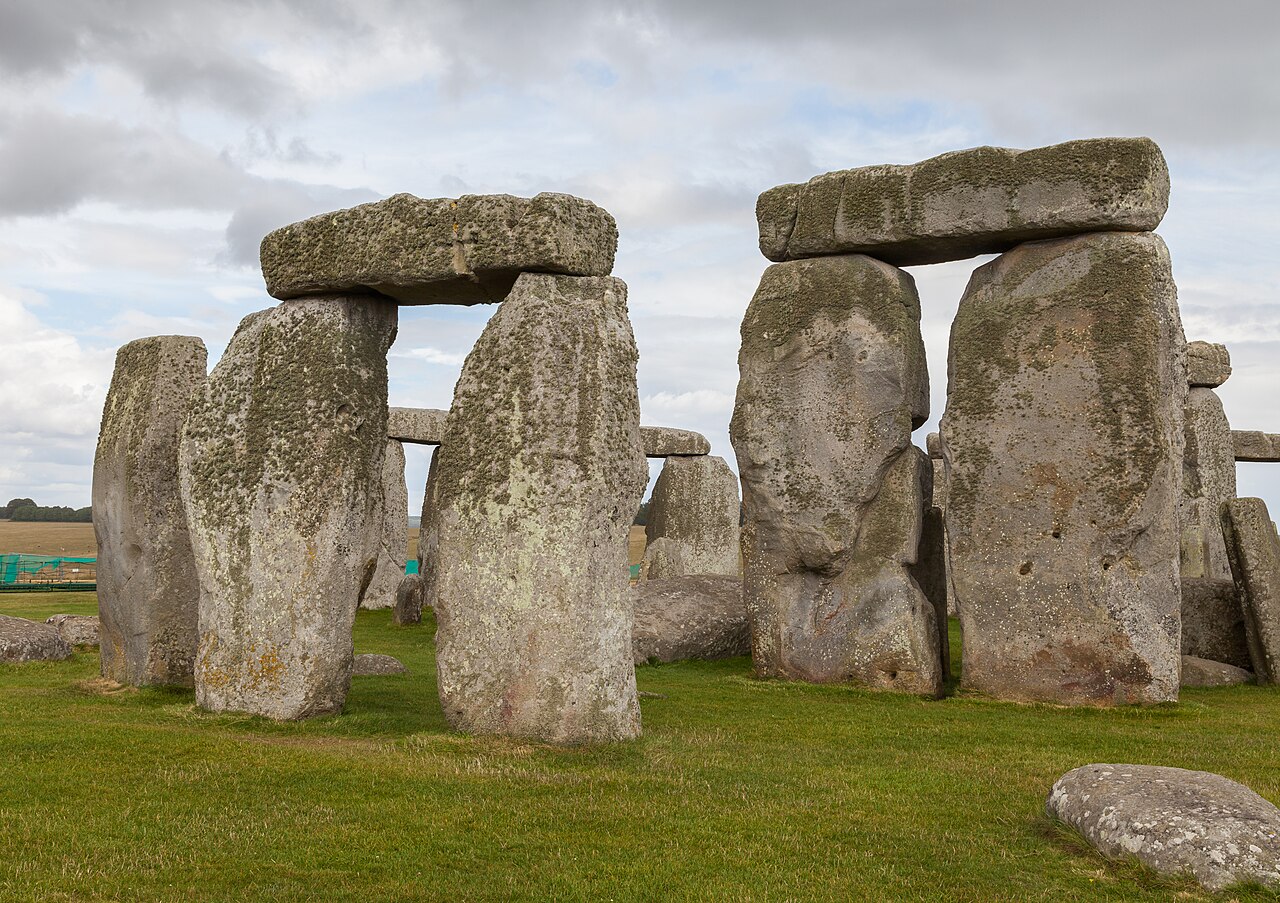
Stonehenge is a prehistoric megalithic structure on Salisbury Plain in Wiltshire, England, two miles west of Amesbury. It consists of an outer ring of vertical sarsen standing stones, each around 13 feet high, seven feet wide, and weighing around 25 tons, topped by connecting horizontal lintel stones held in place with mortise and tenon joints. Inside is a ring of smaller bluestones, and within these are free-standing trilithons. The monument is aligned towards the sunrise on the summer solstice and sunset on the winter solstice.
- Location
- Salisbury Plain, Wiltshire, England
- Type
- Prehistoric megalithic monument
- Material
- Sarsen stone, bluestone
- Height of outer sarsens
- 13 feet (4.0 m)
- Weight of outer sarsens
- around 25 tons
Lore & Background
The whole monument is now in ruins. Stonehenge is owned by the Crown Estate and managed by English Heritage; the surrounding land is owned by the National Trust.
Reader's Guide
Stonehenge is one of the most famous landmarks in the United Kingdom and is regarded as a British cultural icon. The monument is set within earthworks in the middle of the densest complex of Neolithic and Bronze Age monuments in England, including several hundred tumuli (burial mounds). The etymology of the name Stonehenge likely derives from Old English words meaning 'stone' and either 'hinge' or 'to hang', referring to the stone lintels. The 'henge' portion has given its name to a class of monuments known as henges, defined by archaeologists as earthworks consisting of a circular banked enclosure with an internal ditch.
Did You Know?
- Stonehenge consists of an outer ring of vertical sarsen standing stones, each around 13 feet high, seven feet wide, and weighing around 25 tons.
- The monument is aligned towards the sunrise on the summer solstice and sunset on the winter solstice.
Identity and Antiquity
Stonehenge is identified as a Neolithic henge monument situated in Wiltshire, England. Its dating places it in the 3rd millennium BC, making it a structure of extraordinary antiquity. The designation "Neolithic" situates it within the later stages of the Stone Age, while "henge monument" categorizes it within a specific architectural tradition of that era. Its location in Wiltshire, a county in England, anchors it firmly in the British landscape. The 3rd millennium BC dating means it predates many of the structures that would later be celebrated in classical and medieval contexts by thousands of years. This deep antiquity is precisely what makes its later inclusion in lists of architectural wonders so remarkable. Among the structures catalogued in such compilations, Stonehenge stands out as one that was built much earlier than the Middle Ages yet was well known throughout the world, a testament to the enduring power of its presence in the English countryside.
Recognition in Wonders Catalogues
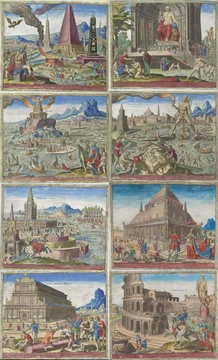
In the 19th and early 20th centuries, various writers sought to emulate the classical Seven Wonders of the Ancient World by compiling their own catalogues of remarkable structures. Among the names given to these lists were "Wonders of the Middle Ages," "Seven Wonders of the Middle Ages," "Seven Wonders of the Medieval Mind," and "Architectural Wonders of the Middle Ages." Stonehenge found a place on these compilations, recognized as one of the structures that had achieved widespread fame across the globe. The lists were not products of the medieval period itself; rather, they were later creations by writers looking back at the architectural heritage of Europe and beyond. Stonehenge's inclusion reflects its status as a structure of enduring renown, one that had been well known throughout the world despite its origins stretching back to the 3rd millennium BC, long before any of the naming conventions applied to it.
The Anachronism of the Medieval Label
The very naming of these lists carries a significant historical irony. The concept of a "Middle Age" as a distinct historical period did not become popular until at least the 16th century, and the specific word "medieval" was not coined until the Enlightenment era. This means that labels such as "Wonders of the Middle Ages" or "Seven Wonders of the Medieval Mind" are, in a sense, anachronistic — they project a later periodization backward onto structures and eras that existed long before such a framework was conceived. Brewer's Dictionary of Phrase and Fable acknowledges this by referring to these compilations as "later list[s]," suggesting they were created well after the period they purport to describe. Stonehenge, dated to the 3rd millennium BC, is among the structures that were built much earlier than the Middle Ages, yet it was included on lists bearing the medieval name, highlighting the gap between the monument's true age and the vocabulary used to celebrate it.
Company Among the World's Marvels
On these 19th- and early-20th-century lists, Stonehenge was placed in the company of other structures that had achieved global recognition. Its fellow entries typically included the Catacombs of Kom El Shoqafa, a 2nd-century funerary complex in Alexandria, Egypt; the Colosseum, a 1st-century amphitheatre in Rome; the Great Wall of China, with segments dating to the 7th century BC; Hagia Sophia, a 6th-century cathedral and mosque in Istanbul; the Leaning Tower of Pisa, a 12th-century bell tower; and the Porcelain Tower of Nanjing, a 15th-century pagoda. Other structures sometimes included were the Cairo Citadel, Cluny Abbey, Ely Cathedral, Khawarnaq palace, and the Fortifications of Derbent. Stonehenge's presence among these diverse monuments, spanning multiple continents, centuries, and architectural traditions, underscores its standing as a structure whose fame transcended its local English setting and its Neolithic origins to earn a place in the global imagination.
Common Misconceptions (Editorial)
One common misconception is that Stonehenge is aligned only to the summer solstice sunrise. In fact, the monument is also aligned towards the sunset on the winter solstice. Another misconception is that Stonehenge is a complete, fully intact structure; in reality, the whole monument is now in ruins.
Why It Matters (Editorial)
Stonehenge endures because it is a testament to the ingenuity and organization of prehistoric societies, who moved and assembled massive stones with remarkable precision using only primitive technology. Its alignment with the solstices also reminds us that ancient peoples closely observed the cosmos, creating structures that connected their lives to the cycles of the sky—a fascination that continues to inspire wonder and study today.
Gallery
Frequently Asked Questions
What is Stonehenge?
Stonehenge is a prehistoric megalithic monument located on Salisbury Plain in Wiltshire, England, about two miles west of the village of Amesbury. It features a ring of towering sarsen standing stones capped with horizontal lintels, enclosing an inner circle of smaller bluestones and a set of free-standing trilithons.
What was Stonehenge's purpose or role?
Its original function is still debated, but the monument's precise alignment with the summer solstice sunrise and winter solstice sunset points to a ceremonial or astronomical purpose. Today it stands as one of Britain's most powerful cultural symbols.
Why is Stonehenge considered a world wonder?
It is one of the most iconic prehistoric structures on Earth and a defining emblem of British heritage. The use of interlocking mortise-and-tenon joints to lock the lintels in place shows a level of stonework engineering that astonished later generations.
What materials make up Stonehenge?
The monument is built from two distinct stone types: the massive outer sarsen stones and the smaller inner bluestones. The sarsens are linked at the top by horizontal lintel stones secured with a clever interlocking joint system.
More in World Wonders 1-22
Spotted an error? Know more?
This is a living reference — every entry is fact-audited, and reader corrections feed straight into our audit queue. Suggest an edit · See this site's audit record