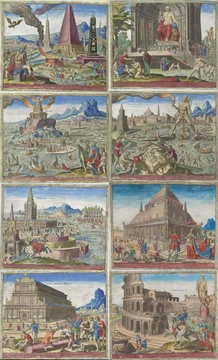
Hagia Sophia
Ancient Early Christian church and Byzantine basilica in Edessa, Turkey.

Chris06 · CC BY-SA 4.0
The Basilica of Hagia Sophia of Edessa (Greek: Ἁγία Σοφία, meaning "Holy Wisdom") was an ancient Early Christian church and later a Byzantine basilica, located in modern-day Edessa, Turkey. It was constructed in the early 3rd century, destroyed in a flood in 525, and restored as a Byzantine basilica by Justinian I. It was supposedly the first site of the appearance of the Mandylion. It was a "twin" basilica of the Hagia Sophia of Constantinople, with a relatively similar floor plan. Although its construction began seven years before the Hagia Sophia of Constantinople, in 525, it was completed eight years after the latter, in 545, mainly due to significant delays. During the Early Middle Ages, it was considered one of the wonders of the world by some Christian and Muslim travelers. It had a single dome rising from a square base and distinguished itself from the capital's basilica by being surrounded by water and having an interior predominantly decorated with white marble.
- Location
- Edessa, Turkey
- Completed
- AD 545
- Former uses
- Church (early 3rd century–12th century)
- Patron
- Byzantine emperor Justinian I
- Architectural style
- Byzantine
Lore & Background
The basilica persisted at least until the early 12th century, when a substantial part of the structure collapsed during a siege of the city. While there are hardly any archaeological traces remaining, textual sources, including a fairly detailed Syriac hymn, can be used to reconstruct the architecture of the building. Hagia Sophia was dedicated to the "Holy Wisdom" (Ἁγία Σοφία / Hagía Sophía), identified with Jesus Christ and not to a human saint. The church was built in the early 3rd century in Edessa, making it the oldest church in the city. Despite numerous floods and earthquakes over the following centuries, it was consistently restored. In 394, it received relics attributed to Thomas the Apostle. Finally, after a significant flood in 525 that destroyed a substantial part of the city, Emperor Justinian I decided to rebuild it. In doing so, he completely modified the structure, transforming the provincial cathedral into a Byzantine basilica. The basilica is said to have been built by the Chalcedonian bishop Amidonius of Edessa, also called Amazonius in some sources, along with two others, Asuph and Addai. However, it appears that the construction faced delays and multiple bishops succeeded each other without real progress. Justinian I intervened in the early 540s to expedite and complete the work, likely motivated by the desire to have the basilica consecrated close to the consecration of the new Chalcedonian bishop, Asklepios. The goal was likely to strengthen the Chalcedonian faction within Syriac Christianity.
Reader's Guide
For many years, the basilica housed the Mandylion, a relic alleged to be the face of Jesus imprinted on a cloth. This relic was placed on the cathedra, and the cathedral gained significance within Christendom, partly due to this relic. During wars, a liturgical ceremony took place in the cathedral, during which the relic was taken outside the church and presented to the Byzantine army. It was then used in battles as the imperial standard. The basilica had a complicated history; it was disputed between the Monophysites, who were trying to take control of it, and the Chalcedonians, who were trying to retain it. After being under Monophysite control for a few decades, it was restored to the Chalcedonians by Emperor Heraclius. This was later confirmed by the early Arab caliphates, who decided to leave the place of worship in the hands of the Chalcedonians. Services were held there bilingually, with two choirs, a Syriac choir, and a Greek choir. Additionally, it is challenging to assess the proportion of Syriac clerics within the cathedral compared to Greek clerics because Chalcedonian Syriac priests tended to bear Greek names, even if they were not Greek. The cathedral survived at least until the 12th century, when the western part of the building collapsed alongside most of it during the siege of the city by the Turks.
Did You Know?
- The basilica was constructed in the early 3rd century, making it the oldest church in Edessa.
- It was supposedly the first site of the appearance of the Mandylion, a cloth alleged to bear the face of Jesus.
- The building was surrounded by water, with the vault painted blue and studded with stars to represent the universe.
- Services were held bilingually with two choirs, one singing in Syriac and the other in Greek.
- The structure collapsed in the early 12th century during a siege of the city by the Turks.
Origins and the Justinian Rebuild
The church in Edessa traces its roots to the early third century, making it the oldest house of worship in that city. For centuries it endured repeated floods and earthquakes, each time being repaired. In 394, relics attributed to Thomas the Apostle were brought to the site, deepening its sacred significance. Then in 525, a devastating flood destroyed much of the city and the church itself. Emperor Justinian I stepped in to rebuild the structure, transforming what had been a modest provincial cathedral into a grand Byzantine basilica. The project was overseen by the Chalcedonian bishop Amidonius, also called Amazonius in some sources, alongside two others, Asuph and Addai, yet progress was painfully slow. Multiple bishops came and went without meaningful advancement. It was not until the early 540s that Justinian personally intervened to push the work to completion, likely hoping to have the new basilica consecrated in time for the enthronement of the new Chalcedonian bishop Asklepios. The timing was not accidental: the emperor sought to shore up the Chalcedonian position within the broader Syriac Christian community. The result was a structure finished in 545, eight years after its Constantinopolitan counterpart.
Architecture and Cosmic Vision
The physical form of the Edessan basilica is known to us almost entirely through a Syriac hymn of twenty-two strophes that describes its proportions and layout with remarkable precision. The building presented three identical exterior faces, confirming a square plan, with the apse forming the only distinct side. A single dome rose from pendentives carried on four arches; its exterior was clad in lead over stone, while the interior ceiling shimmered with mosaics. The walls were sheathed in white marble, lending the interior an extraordinary luminosity. Perhaps most striking was the setting: the structure was encircled by water. The builders appear to have intended a cosmic statement, for the surrounding waters evoked celestial waters, and the vault above was painted blue and scattered with stars. This imagery drew on Genesis and the theology of Pseudo-Dionysius the Areopagite, a thinker of great influence in sixth-century Eastern Christianity. The effect was a building that seemed to model the universe itself, a provincial counterpart to the great Hagia Sophia in Constantinople yet distinguished by its aquatic embrace and marble radiance.
The Mandylion and Sacred Authority
For many years the cathedral served as the repository of the Mandylion, a cloth said to bear the imprinted face of Jesus Christ. The relic was placed upon the cathedra, the bishop's throne, and its presence elevated the Edessan church to a position of exceptional importance across Christendom. The Mandylion was not merely a static object of veneration. During times of war, a special liturgical ceremony was performed in which the relic was carried outside the church and presented before the Byzantine army. It then served as the imperial standard on the battlefield, a tangible link between divine authority and military power. The cathedral's dedication itself was theologically loaded: it was consecrated to the Holy Wisdom, a title identified with Christ rather than any human saint, reinforcing the Christocentric focus of the space. Together, the relic, the dedication, and the ceremonial role in warfare made the basilica far more than a local parish church; it functioned as a node of imperial and sacred power in the eastern provinces.
Religious Contention and Final Collapse
The basilica's history was marked by fierce internal conflict between Monophysite and Chalcedonian factions. The Monophysites made repeated attempts to seize control of the building, and for several decades they succeeded in holding it. Emperor Heraclius eventually restored the cathedral to the Chalcedonians, and this arrangement was later affirmed by the early Arab caliphates, who chose to leave the place of worship in Chalcedonian hands. Services within the cathedral were conducted bilingually, with two separate choirs, one singing in Syriac, the other in Greek. Assessing the exact balance of Syriac and Greek clerics is difficult, since Chalcedonian Syriac priests often adopted Greek names, blurring the ethnic and linguistic lines. The structure endured at least until the early twelfth century, when a siege of Edessa by Turkish forces brought the western portion of the building down, and with it most of the structure. Today, virtually no archaeological traces remain on the ground. Our knowledge of this once-magnificent basilica rests almost entirely on textual sources, chief among them the detailed Syriac hymn that preserves its architectural description.
Common Misconceptions (Editorial)
1. Some assume the Hagia Sophia of Edessa is merely a smaller copy or later imitation of the Hagia Sophia in Constantinople. In fact, construction began seven years before Constantinople’s Hagia Sophia, though it was completed eight years after due to delays. 2. Others might think a building called “Hagia Sophia” must be a cathedral dedicated to a female saint. Actually, it was dedicated to “Holy Wisdom” (Ἁγία Σοφία), identified with Jesus Christ, not a human saint.
Why It Matters (Editorial)
Though little physical trace remains, the Hagia Sophia of Edessa endures as a testament to the architectural and theological ambitions of early Byzantine Christianity. Its story—shaped by floods, imperial intervention, and a contested religious landscape—reminds us that even lost structures can illuminate how faith and power converged in the ancient world.
Gallery
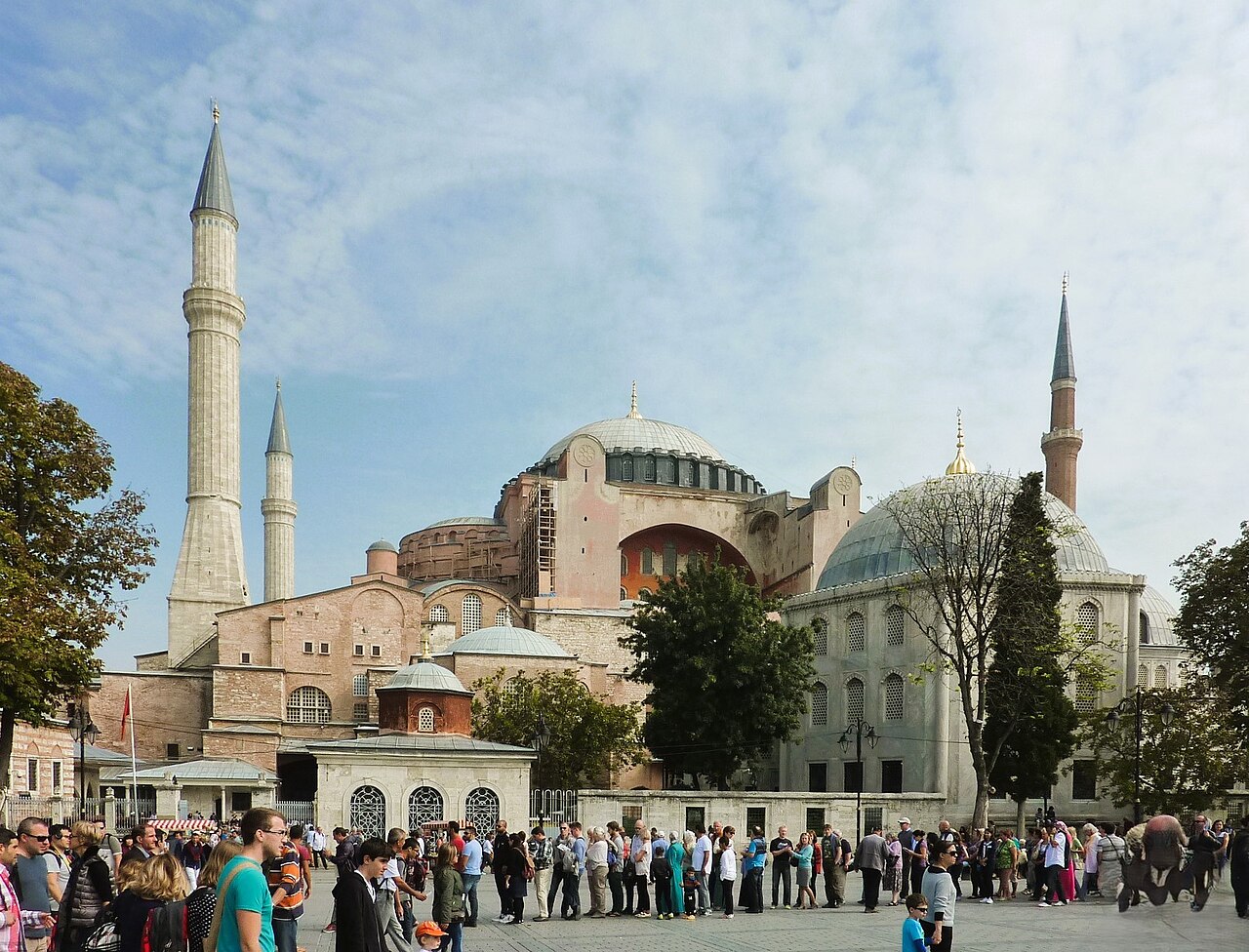
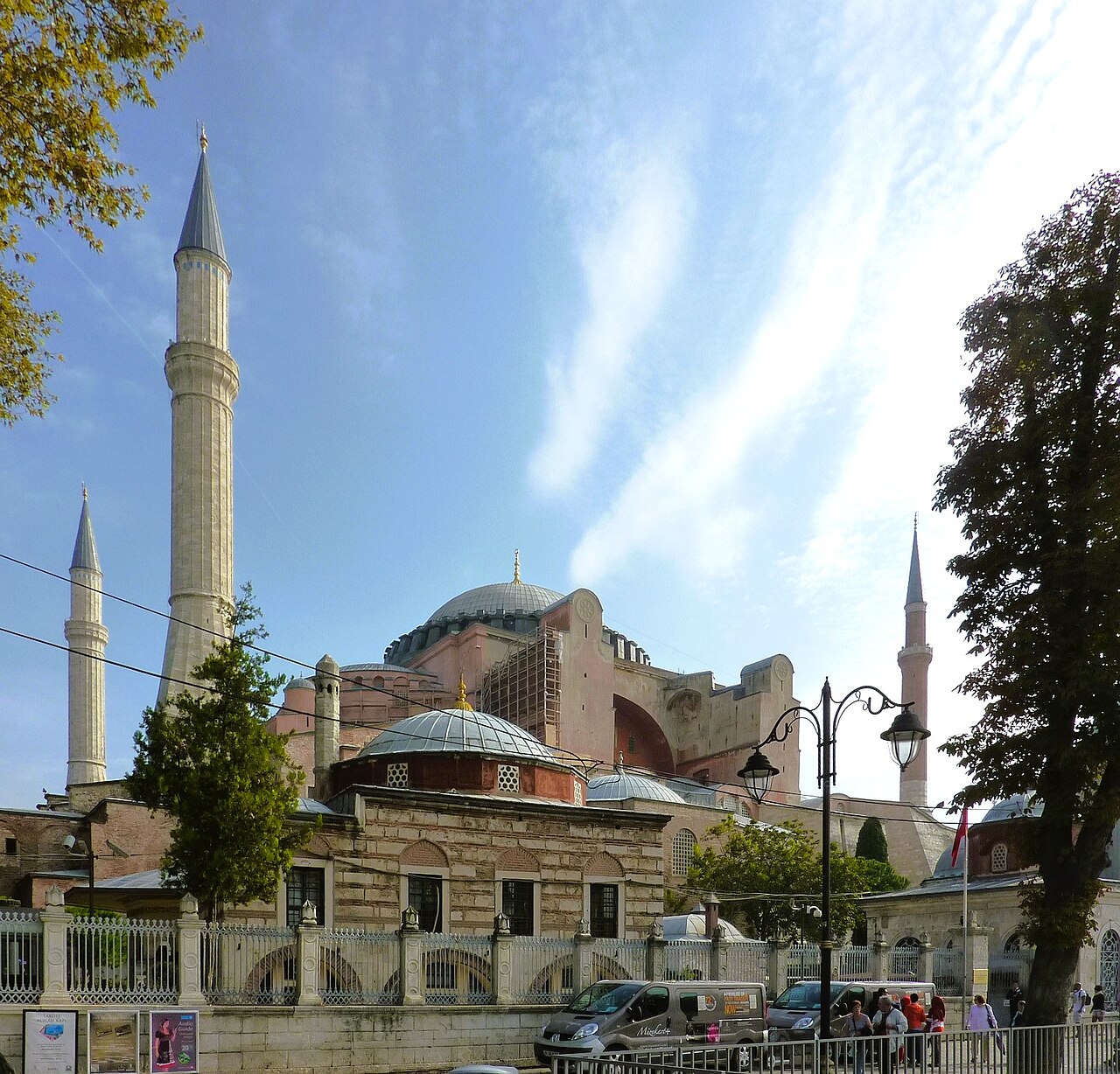
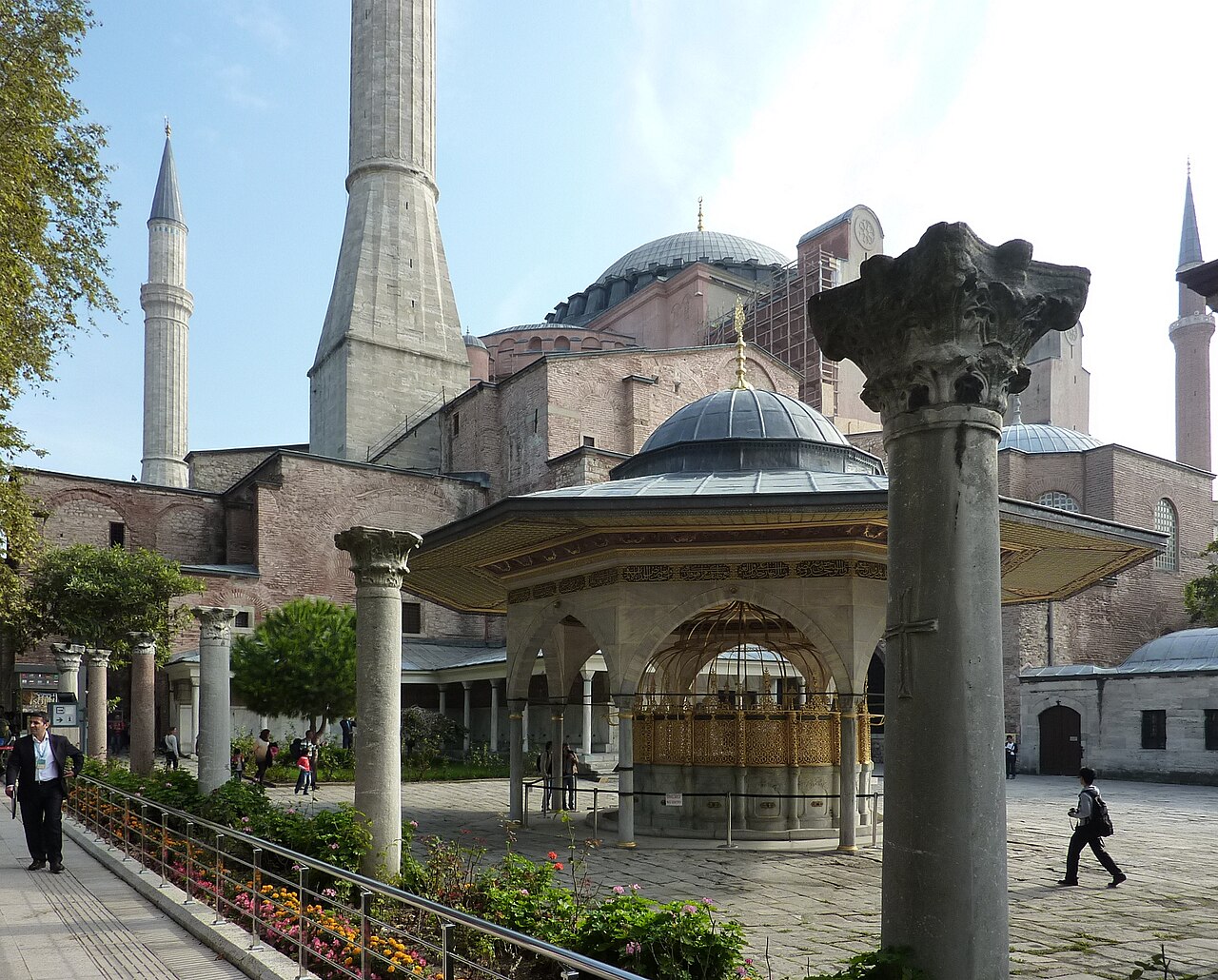
Frequently Asked Questions
Who is Hagia Sophia?
Hagia Sophia is a monumental religious and cultural landmark in Istanbul, Turkey, that has served as a cathedral, a mosque, and a museum across its long history. It currently functions as a mosque after being reopened for worship in 2020.
What are Hagia Sophia's powers or role?
Its defining achievement is the massive pendentive dome that was revolutionary for its era, creating what became the largest interior space in the world at the time. This engineering feat is credited with reshaping the trajectory of architecture for centuries afterward.
How does Hagia Sophia's story end?
Its narrative is still unfolding, as the building transitioned from a Byzantine cathedral to an Ottoman mosque in 1453, then to a secular museum in 1935, and back to active mosque use in 2020. Each chapter reflects the shifting political and religious identity of Istanbul.
Why is Hagia Sophia important?
It is widely regarded as the pinnacle of Byzantine architectural achievement and a symbol of how successive civilizations have layered their heritage onto a single site. Its dome and structural innovations influenced builders across Europe and the Islamic world for over a millennium.
Who designed Hagia Sophia and when was it finished?
The structure was completed in AD 537 under the patronage of Emperor Justinian I, with the architectural work attributed to Isidore of Miletus and Anthemius of Tralles. It was the third and final church erected on that particular Istanbul site by the Eastern Roman Empire.
More in World Wonders 1-22
Spotted an error? Know more?
This is a living reference — every entry is fact-audited, and reader corrections feed straight into our audit queue. Suggest an edit · See this site's audit record